<?xml version='1.0' encoding='UTF-8'?>

<!DOCTYPE article PUBLIC "-//NLM//DTD JATS (Z39.96) Journal Publishing DTD v1.1d1 20130915//EN" "JATS-journalpublishing1.dtd">
<article xmlns:xlink="http://www.w3.org/1999/xlink">
  <front>
    <journal-meta id="journal-meta-87cddb9ab7774ac9973b6a64b7cbc767">
      <journal-id journal-id-type="nlm-ta">Sciresol</journal-id>
      <journal-id journal-id-type="publisher-id">Sciresol</journal-id>
      <journal-id journal-id-type="journal_submission_guidelines">https://jmsh.ac.in/</journal-id>
      <journal-title-group>
        <journal-title>Journal of Medical Sciences and Health</journal-title>
      </journal-title-group>
      <issn publication-format="print"/>
    </journal-meta>
    <article-meta>
        
          
            <article-id pub-id-type="doi">10.71325/ajjms.v3i2.26.31</article-id>
          
          
            <article-categories>
              <subj-group>
                <subject>REVIEW ARTICLE</subject>
              </subj-group>
            </article-categories>
            <title-group>
              <article-title>&lt;p&gt;Insights into Virulence and Pathogenesis of &lt;em&gt;Staphylococcus aureus&lt;/em&gt; and &lt;em&gt;Mycobacterium tuberculosis&lt;/em&gt;: A Comprehensive Review&lt;/p&gt;</article-title>
            </title-group>
          
          
            <pub-date date-type="pub">
              <day>30</day>
              <month>3</month>
              <year>2026</year>
            </pub-date>
            <permissions>
              <copyright-year>2026</copyright-year>
            </permissions>
          
          
            <volume>3</volume>
          
          
            <issue>2</issue>
          
          <fpage>1</fpage>

          <abstract>
            <title>Abstract</title>
            &lt;p&gt;Bacterial pathogens employ diverse virulence factors to establish infection, evade host defences and promote disease progression. This review examines the virulence strategies of two clinically significant human pathogens, &lt;emphasis&gt;Staphylococcus aureus&lt;/emphasis&gt; and &lt;emphasis&gt;Mycobacterium tuberculosis,&lt;/emphasis&gt; which represent contrasting paradigms of bacterial infection. &lt;emphasis&gt;S. aureus&lt;/emphasis&gt; utilizes an extensive repertoire of adhesins, exotoxins, immune evasion molecules and biofilm-forming mechanisms to induce rapid tissue destruction and systemic disease. In contrast, &lt;emphasis&gt;M. tuberculosis&lt;/emphasis&gt; relies on complex cell wall components, intracellular survival mechanisms, immune modulation and dormancy associated pathways to establish persistent infection. Key virulence determinants include Microbial Surface Components Recognizing Adhesive Matrix Molecules (MSCRAMMs), protein A, α-toxins, quorum sensing systems, mycolic acids, lipoarabinomannan, ESX secretion systems and the DosR regulon. A comparative analysis highlights fundamental differences in acute and chronic infection strategies adopted by these pathogens. Understanding these distinct virulence strategies may facilitate the development of novel anti-virulence therapies and host-directed interventions, particularly in the context of rising antimicrobial-resistant pathogens.&lt;/p&gt;
          </abstract>
          
          
            <kwd-group>
              <title>Keywords</title>
              
                <kwd>Virulence factors</kwd>
              
                <kwd>Staphylococcus aureus</kwd>
              
                <kwd>Mycobacterium tuberculosis</kwd>
              
                <kwd>Pathogenesis</kwd>
              
                <kwd>Immune evasion</kwd>
              
                <kwd>Biofilms</kwd>
              
                <kwd>Anti-virulence therapy</kwd>
              
                <kwd>Toxins</kwd>
              
                <kwd>Intracellular survival</kwd>
              
            </kwd-group>


        <contrib-group>
          
            
              <contrib contrib-type="author">
                <name>
                  <surname>Malli</surname>
                  <given-names>Chaithra</given-names>
                </name>
                
                  <xref rid="aff-1" ref-type="aff">1</xref>
                
              </contrib>


              <aff id="aff-1">
                <institution> Assistant Professor, Department of Microbiology and Research Centre A.J. Institute of Medical Sciences and Research Centre </institution>
                <addr-line>Mangalore, Karnataka, 575004 India</addr-line>
              </aff>
            
              <aff id="aff-2">
                <institution> Intern Doctor A.J. Institute of Medical Sciences and Research Centre </institution>
                <addr-line>Mangalore, Karnataka, 575004 India</addr-line>
              </aff>


              <contrib contrib-type="author">
                <name>
                  <surname>Shetty</surname>
                  <given-names>Saachi S</given-names>
                </name>
                
                  <xref rid="aff-2" ref-type="aff">2</xref>
                
              </contrib>


              <aff id="aff-1">
                <institution> Assistant Professor, Department of Microbiology and Research Centre A.J. Institute of Medical Sciences and Research Centre </institution>
                <addr-line>Mangalore, Karnataka, 575004 India</addr-line>
              </aff>
            
              <aff id="aff-2">
                <institution> Intern Doctor A.J. Institute of Medical Sciences and Research Centre </institution>
                <addr-line>Mangalore, Karnataka, 575004 India</addr-line>
              </aff>
            
          
        </contrib-group>
        
    </article-meta>
  </front>
  <body>
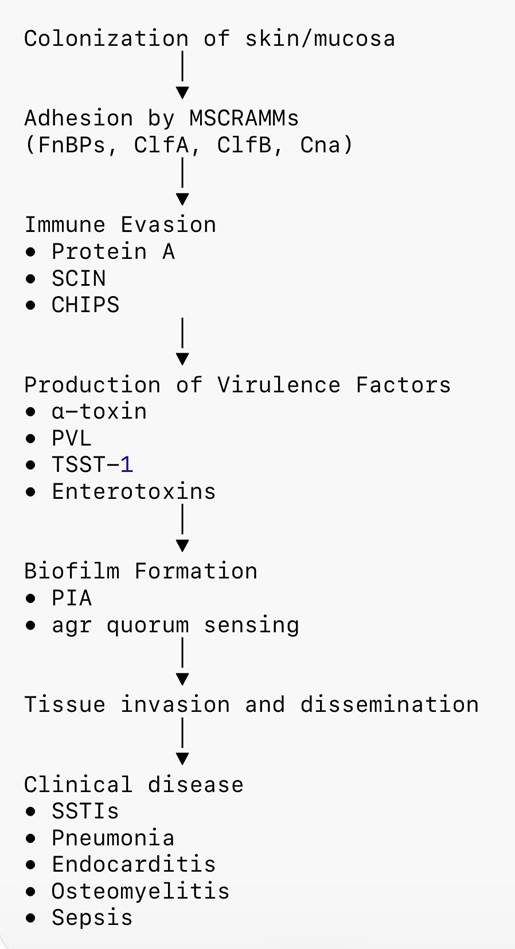
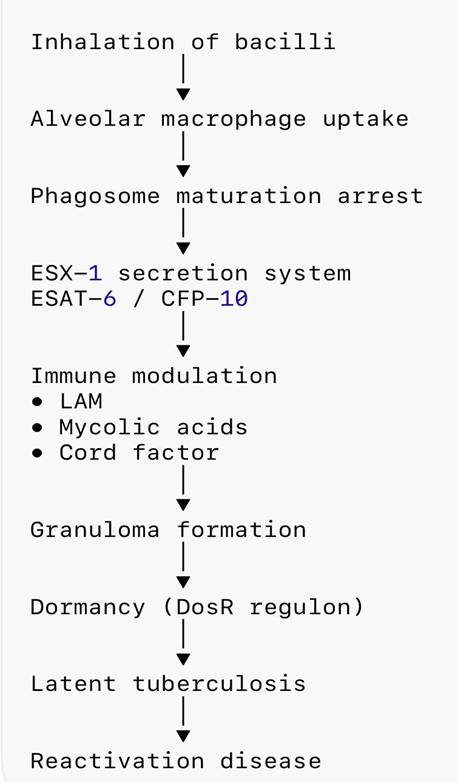
    <heading><span><bold>INTRODUCTION</bold></span></heading><p><span>Bacterial virulence factors comprise specialized structural components, secreted effectors, enzymes, and regulatory networks that enable pathogens to colonize host tissues, evade immune responses, and establish disease<superscript><superscript>[<xref ref-type="link" rid="#ref-1">1</xref>]</superscript></superscript>. These factors coordinate critical stages of infection, including adhesion, invasion, immune modulation and dissemination.</span></p><p><span>Among bacterial pathogens, </span><italic><span>Staphylococcus aureus </span></italic><span>and </span><italic><span>Mycobacterium tuberculosis</span></italic><span> represent two contrasting yet globally important models of infection. </span><italic><span>Staphylococcus aureus</span></italic><span> is a Gram-positive opportunistic pathogen responsible for a wide spectrum of diseases ranging from superficial skin and soft tissue infections to life threatening endocarditis, osteomyelitis, necrotizing pneumonia and sepsis<superscript><superscript>[<xref ref-type="link" rid="#ref-2">2</xref>]</superscript></superscript>. Its success as a pathogen is attributed to its diverse range of virulence factors and its ability to acquire antimicrobial resistance, exemplified by Methicillin-resistant </span><italic><span>S. aureus </span></italic><span>(MRSA). Recent studies have demonstrated that </span><italic><span>S. aureus</span></italic><span> primarily relies on adhesins, exotoxins, immune evasion molecules and biofilm formation, contributing to persistence, recurrence and treatment failure<superscript><superscript>[<xref ref-type="link" rid="#ref-3">3</xref>]</superscript></superscript>. </span></p><p><span>Conversely, </span><italic><span>Mycobacterium tuberculosis,</span></italic><span> the etiological agent of tuberculosis, one of the leading infectious causes of mortality worldwide is a slow-growing intracellular pathogen that primarily infects macrophages. </span><italic><span>M. tuberculosis’</span></italic><span>s virulence stems from its ability to survive inside host cells  through a lipid-rich cell envelope, manipulate ESX secretion systems, form granulomas and establish dormancy<superscript><superscript>[<xref ref-type="link" rid="#ref-4">4</xref>, <xref ref-type="link" rid="#ref-5">5</xref>]</superscript></superscript>. </span></p><p><span>The selection of </span><italic><span>Staphylococcus aureus</span></italic><span> and </span><italic><span>Mycobacterium tuberculosis</span></italic><span> for comparison is particularly relevant because they represent two fundamentally different strategies of bacterial pathogenesis. While </span><italic><span>S. aureus</span></italic><span> causes predominantly acute, toxin-mediated infections, </span><italic><span>M. tuberculosis</span></italic><span> establishes chronic intracellular infection through immune modulation and persistence. Both organisms remain major contributors to global morbidity and antimicrobial resistance, making them important models for studying virulence evolution and therapeutic innovation<superscript><superscript>[<xref ref-type="link" rid="#ref-6">6</xref>]</superscript></superscript>. </span></p><p><span>This review provides valuable insights into conserved and divergent virulence mechanisms and highlights opportunities for anti-virulence and host-directed therapeutic interventions.</span></p><heading><span><bold>Virulence Factors and Pathogenesis of </bold></span><italic><span><bold>Staphylococcus aureus</bold></span></italic></heading><heading><span><bold>Adhesion and Colonization</bold></span></heading><p><span>Successful infection by </span><italic><span>S. aureus</span></italic><span> begins with adhesion to host tissues. This process is mediated by a family of surface proteins called Microbial Surface Components Recognizing Adhesive Matrix Molecules (MSCRAMMs)<superscript><superscript>[<xref ref-type="link" rid="#ref-7">7</xref>]</superscript></superscript>. Important members include fibronectin-binding proteins (FnBPA and FnBPB), clumping factors (ClfA and ClfB) and the collagen-binding protein (Cna). </span></p><p><span>These proteins facilitate attachment to extracellular matrix components such as fibronectin, fibrinogen and collagen, promoting colonization and invasion of host tissues. ClfA, for example, binds fibrinogen and plays a crucial role in bloodstream infections by enhancing bacteria aggregation<superscript><superscript>[<xref ref-type="link" rid="#ref-8">8</xref>]</superscript></superscript>. </span></p><heading><span><bold>Immune Evasion Mechanism</bold></span></heading><p><span>Following colonization, </span><italic><span>S. aureus </span></italic><span>employs sophisticated tactics to evade host immune responses and contribute to chronic infections, emphasizing that </span><italic><span>S. aureus</span></italic><span> should no longer be considered as an exclusively extracellular pathogen<superscript><superscript>[<xref ref-type="link" rid="#ref-9">9</xref>, <xref ref-type="link" rid="#ref-10">10</xref>]</superscript></superscript>. These tactics include interfering with complement activation, neutralizing antibodies, and manipulating host cell signaling pathways. </span></p><p><span>Protein A binds to the Fc region of immunoglobulin G (IgG), thereby impairing opsonization and phagocytosis<superscript><superscript>[<xref ref-type="link" rid="#ref-11">11</xref>]</superscript></superscript>. This mechanism effectively disguises bacteria from immune recognition. </span></p><p><span>Additional immune evasion factors include the staphylococcal complement inhibitor (SCIN), which inhibits complement activation and the chemotaxis inhibitory protein of staphylococci (CHIPS) which disrupts neutrophil recruitment. Together, these factors reduce the effectiveness of innate immune responses and facilitate bacterial survival<superscript><superscript>[<xref ref-type="link" rid="#ref-12">12</xref>]</superscript></superscript>.</span></p><heading><span><bold>Exotoxins and Tissue Damage</bold></span></heading><p><span>A hallmark of S. aureus pathogenesis is the production of potent exotoxins that directly damage host tissues. Alpha-toxin (α-hemolysin) forms pores in the membranes of host cells, resulting in cell lysis and tissue destruction. This toxin is particularly important in pneumonia and skin infections. </span></p><p><span>Panton-Valentine leukocidin (PVL) specifically targets leukocytes, promoting immune cell destruction and enhancing bacterial survival. Toxic shock syndrome toxin-1 (TSST-1) and enterotoxins function as superantigens, triggering non-specific T-cell activation and massive cytokine release leading to systemic inflammation. </span></p><p><span>Emerging research suggests that toxin-mediated virulence is often synergistic rather than isolated. Interactions between α-toxins, PVL and other cytotoxins amplify tissue injury and disease severity, particularly in highly virulent MRSA strains<superscript><superscript>[<xref ref-type="link" rid="#ref-13">13</xref>]</superscript></superscript>. </span></p><heading><span><bold>Enzymatic Virulence Factors</bold></span></heading><p><italic><span>S. aureus</span></italic><span> secretes several enzymes that aid in tissue invasion and nutrient acquisition. Coagulase promotes fibrin clot formation, providing a protective niche around bacterial colonies. Hyaluronidase degrades connective tissue matrices, while proteases and lipases digest host macromolecules<superscript><superscript>[<xref ref-type="link" rid="#ref-14">14</xref>]</superscript></superscript>.</span></p><heading><span><bold>Biofilm formation </bold></span></heading><p><span>Biofilm formation represents a major virulence strategy that contributes to chronic infection and antibiotic tolerance by reducing antibiotic penetration and enhancing bacterial persistence. This process begins with adhesion mediated by MSCRAMMs and progresses through bacterial aggregation and accumulation of polysaccharide intercellular adhesin (PIA)<superscript><superscript>[<xref ref-type="link" rid="#ref-15">15</xref>, <xref ref-type="link" rid="#ref-16">16</xref>]</superscript></superscript>. Biofilms-associated infections are particularly problematic in indwelling medical devices such as catheters, prosthetic joints and cardiac implants. </span></p><p><span>Emerging evidence suggests that biofilm architecture is highly dynamic and regulated by environmental stress, quorum sensing, and metabolic adaptation, contributing significantly to antibiotic tolerance and immune evasion. </span></p><heading><span><bold>Regulation of Virulence</bold></span></heading><p><span>The expression of virulence determinants is tightly controlled through global regulatory systems. The accessory gene regulator (agr) system is a quorum-sensing mechanism that regulates toxin production and biofilm formation<superscript><superscript>[<xref ref-type="link" rid="#ref-17">17</xref>]</superscript></superscript>. Other regulators, including SarA and sigma factor B (σB), modulate stress responses and coordinate the expression of virulence associated-genes. </span></p><figure id="table-1"><table><thead><tr><th><span><bold>Virulence factor</bold></span></th><th><span><bold>Function</bold></span></th><th><span><bold>Clinical significance</bold></span></th></tr></thead><tbody><tr><td><span>MSCRAMMs</span></td><td><span>Adhesion to extracellular matrix</span></td><td><span>Colonization</span></td></tr><tr><td><span>Protein A</span></td><td><span>Fc-binding protein</span></td><td><span>Immune evasion</span></td></tr><tr><td><span>SCIN</span></td><td><span>Complement inhibition</span></td><td><span>Reduced opsonization</span></td></tr><tr><td><span>CHIPS</span></td><td><span>Inhibits neutrophil chemotaxis</span></td><td><span>Immune escape</span></td></tr><tr><td><span>α-toxin</span></td><td><span>Pore-forming toxin</span></td><td><span>Tissue destruction</span></td></tr><tr><td><span>PVL</span></td><td><span>Leukocyte destruction</span></td><td><span>Necrotizing infections</span></td></tr><tr><td><span>TSST-1</span></td><td><span>Superantigen</span></td><td><span>Toxic shock syndrome</span></td></tr><tr><td><span>Coagulase</span></td><td><span>Fibrin clot formation</span></td><td><span>Protection from phagocytosis</span></td></tr><tr><td><span>Hyaluronidase</span></td><td><span>Tissue invasion</span></td><td><span>Spread of infection</span></td></tr><tr><td><span>agr system</span></td><td><span>Quorum sensing</span></td><td><span>Virulence regulation</span></td></tr><tr><td><span>Biofilm (PIA)</span></td><td><span>Persistence</span></td><td><span>Device-associated infections</span></td></tr></tbody></table><figcaption><span><bold>Table 1: Major virulence factors of </bold></span><italic><span><bold>Staphylococcus aureus</bold></span></italic></figcaption></figure><p> </p><heading><span><bold>Virulence Factors and Pathogenesis of </bold></span><italic><span><bold>Mycobacterium tuberculosis</bold></span></italic></heading><heading><span><bold>Cell Wall Components</bold></span></heading><p><span>The unique lipid rich cell wall of </span><italic><span>M. tuberculosis</span></italic><span> is a major virulence determinant. Mycolic acid confers resistance to desiccation, disinfectants and many antimicrobial agents.   </span></p><p><span>Lipoarabinomannan (LAM) modulates host immune responses by inhibiting macrophage activation and cytokine production. Another critical lipid, trehalose dimycolate (cord factor), contributes to granuloma formation and tissue pathology<superscript><superscript>[<xref ref-type="link" rid="#ref-18">18</xref>-<xref ref-type="link" rid="#ref-20">20</xref>]</superscript></superscript>. </span></p><p><span>These cell wall components not only provide structural protection but also actively participate in host-pathogen interactions. </span></p><heading><span><bold>Intracellular Survival </bold></span></heading><p><span>Unlike </span><italic><span>S. aureus,</span></italic><span> </span><italic><span>M. tuberculosis </span></italic><span>primarily survives within macrophages. After phagocytosis, the pathogen prevents phagosome-lysosome fusion, thereby escaping intracellular destruction. </span></p><p><span>The bacteria further resists oxidative and nitrosative stress while manipulating host signaling pathways to create a favorable intracellular environment. Recent studies have demonstrated that </span><italic><span>M. tuberculosis</span></italic><span> can alter host cell metabolism and inhibits autophagy, enhancing long-term intracellular persistence<superscript><superscript>[<xref ref-type="link" rid="#ref-21">21</xref>, <xref ref-type="link" rid="#ref-22">22</xref>]</superscript></superscript>. </span></p><heading><span><bold>ESX-1 Secretion System</bold></span></heading><p><span>The ESX-1 (Type VII) secretion system is among the most important virulence mechanisms for </span><italic><span>M. tuberculosis</span></italic><span>. It secretes proteins such as ESAT-6, which disrupts phagosomal membranes and CFP-10, which stabilizes ESAT-6 and boosts virulence<superscript><superscript>[<xref ref-type="link" rid="#ref-23">23</xref>]</superscript></superscript>. </span></p><p><span>Beyond membrane disruption, ESX-1 also modulates host immune signaling and contributes to bacterial spread between cells. Studies have shown that mutations affecting ESX-1 components markedly reduce virulence, highlighting its potential as a therapeutic target.</span></p><heading><span><bold>Granuloma Formation and Immune Modulation</bold></span></heading><p><span>Granulomas are structured immune clusters that develop in response to persistent infection. While granulomas restrict bacterial dissemination, they simultaneously provide a protected niche that facilitates long-term persistence. </span></p><p><italic><span>M. tuberculosis </span></italic><span>manipulates granuloma dynamics by suppressing antigen presentation, promoting anti-inflammatory cytokines such as IL-10 and inhibiting programmed cell death<superscript><superscript>[<xref ref-type="link" rid="#ref-24">24</xref>]</superscript></superscript>. Through these mechanisms, the pathogen maintains a delicate balance between immune activation and immune suppression, thereby ensuring long term survival within the host. </span></p><heading><span><bold>Dormancy and Latency </bold></span></heading><p><span>A defining characteristic of </span><italic><span>M. tuberculosis</span></italic><span> is its ability to enter a dormant state during latent infection. </span></p><p><span>The DosR regulon becomes activated under hypoxic and stress conditions, inducing a transcriptional program that promotes long term bacterial survival<superscript><superscript>[<xref ref-type="link" rid="#ref-25">25</xref>]</superscript></superscript>. Dormant bacilli exhibit reduced metabolic activity and increased resistance to both antimicrobial therapy and immune-mediated clearance. Recent investigations into the DosR regulon and resuscitation-promoting factors have improved understanding of latent tuberculosis and identified potential therapeutic targets for preventing disease reactivation<superscript><superscript>[<xref ref-type="link" rid="#ref-26">26</xref>]</superscript></superscript>.</span></p><p><span>This ability to establish latency distinguishes </span><italic><span>M. tuberculosis</span></italic><span> from many other bacterial pathogens and represents a major challenge for tuberculosis control efforts worldwide. Additionally, this global burden is exacerbated by the rise of multidrug-resistant (MDR-TB) and extensively drug-resistant tuberculosis (XDR-TB).</span></p><figure><table><thead><tr><th><span><bold>Virulence factor</bold></span></th><th><span><bold>Function</bold></span></th><th><span><bold>Clinical significance</bold></span></th></tr></thead><tbody><tr><td><span>Mycolic acids</span></td><td><span>Cell wall integrity</span></td><td><span>Drug resistance</span></td></tr><tr><td><span>Lipoarabinomannan (LAM)</span></td><td><span>Immune modulation</span></td><td><span>Macrophage dysfunction</span></td></tr><tr><td><span>Cord factor</span></td><td><span>Granuloma formation</span></td><td><span>Tissue damage</span></td></tr><tr><td><span>ESX-1 secretion system</span></td><td><span>ESAT-6 secretion</span></td><td><span>Intracellular survival</span></td></tr><tr><td><span>CFP-10</span></td><td><span>ESAT-6 stabilization</span></td><td><span>Virulence</span></td></tr><tr><td><span>DosR regulon</span></td><td><span>Dormancy</span></td><td><span>Latent TB</span></td></tr><tr><td><span>Antioxidant enzymes</span></td><td><span>Oxidative stress resistance</span></td><td><span>Intracellular persistence</span></td></tr><tr><td><span>Lipid metabolism</span></td><td><span>Nutrient acquisition</span></td><td><span>Chronic infection</span></td></tr></tbody></table><figcaption><span><bold>Table 2: Major virulence factors of </bold></span><italic><span><bold>Mycobacterium tuberculosis</bold></span></italic></figcaption></figure><p> </p><heading><span><bold>Emerging Anti-virulence and Host-directed Therapeutic Strategies</bold></span></heading><p><span>Recent therapeutic strategies increasingly target bacterial virulence rather than viability, thereby reducing selective pressure for antimicrobial resistance. For </span><italic><span>S. aureus,</span></italic><span> inhibition of the agr quorum-sensing system, neutralization of α-toxin with monoclonal antibodies, anti-biofilm peptides, bacteriophage therapy and vaccines targeting surface adhesins have demonstrated promising preclinical or early clinical results<superscript><superscript>[<xref ref-type="link" rid="#ref-27">27</xref>, <xref ref-type="link" rid="#ref-28">28</xref>]</superscript></superscript>. Similarly, host-directed therapies for tuberculosis seek to augment host immunity instead of directly targeting the bacillus. Agents such as metformin, vitamin D, statins and autophagy-inducing drugs improve macrophage antimicrobial activity and may enhance treatment outcomes<superscript><superscript>[<xref ref-type="link" rid="#ref-29">29</xref>-<xref ref-type="link" rid="#ref-32">32</xref>]</superscript></superscript>. Novel inhibitors targeting the ESX-1 secretion system and bacterial dormancy pathways are also under investigation<superscript><superscript>[<xref ref-type="link" rid="#ref-33">33</xref>, <xref ref-type="link" rid="#ref-34">34</xref>]</superscript></superscript>. Integration of host-directed therapies with conventional antimicrobial regimens may shorten treatment duration and reduce emergence of resistance.</span></p><p><span>Future research should focus on integrating genomic, transcriptomic, and proteomic approaches to better understand host-pathogen interactions and identify novel therapeutic targets. </span></p><figure id="table-3"><table><thead><tr><th><span><bold>Pathogen</bold></span></th><th><span><bold>Current targets</bold></span></th><th><span><bold>Emerging targets</bold></span></th></tr></thead><tbody><tr><td><italic><span>S. aureus</span></italic></td><td><span>Antibiotics</span></td><td><span>agr inhibitors, anti-α toxin antibodies, anti-biofilm peptides, bacteriophage therapy, vaccines</span></td></tr><tr><td><italic><span>M. tuberculosis</span></italic></td><td><span>Standard anti-TB drugs</span></td><td><span>Host-directed therapy, ESX-1 inhibitors, autophagy enhancers, metformin, statins, vitamin D, immune checkpoint modulation</span></td></tr></tbody></table><figcaption><span><bold>Table 3: Emerging therapeutic targets</bold></span></figcaption></figure><p> </p><figure id="table-4"><table><thead><tr><th><span><bold>Feature</bold></span></th><th><italic><span><bold>Staphylococcus aureus</bold></span></italic></th><th><italic><span><bold>Mycobacterium tuberculosis</bold></span></italic></th></tr></thead><tbody><tr><td><span>Gram stain</span></td><td><span>Gram-positive coccus</span></td><td><span>Acid-fast bacillus</span></td></tr><tr><td><span>Primary lifestyle</span></td><td><span>Extracellular (facultative intracellular)</span></td><td><span>Obligate intracellular pathogen</span></td></tr><tr><td><span>Reservoir</span></td><td><span>Skin and nasal mucosa</span></td><td><span>Human lungs</span></td></tr><tr><td><span>Disease pattern</span></td><td><span>Acute</span></td><td><span>Chronic</span></td></tr><tr><td><span>Major virulence factors</span></td><td><span>MSCRAMMs, Protein A, α-toxin, PVL</span></td><td><span>Mycolic acids, LAM, ESX-1, DosR</span></td></tr><tr><td><span>Immune evasion</span></td><td><span>Protein A, SCIN, CHIPS</span></td><td><span>Phagosome maturation arrest, immune modulation</span></td></tr><tr><td><span>Persistence mechanism</span></td><td><span>Biofilm, intracellular survival</span></td><td><span>Granuloma formation, latency</span></td></tr><tr><td><span>Tissue damage</span></td><td><span>Toxin-mediated</span></td><td><span>Immune-mediated</span></td></tr><tr><td><span>Drug resistance</span></td><td><span>MRSA</span></td><td><span>MDR-TB, XDR-TB</span></td></tr><tr><td><span>Emerging therapies</span></td><td><span>Anti-toxin antibodies, agr inhibitors</span></td><td><span>Host-directed therapy, ESX-1 inhibitors</span></td></tr><tr><td><span>Vaccine status</span></td><td><span>No licensed vaccine</span></td><td><span>BCG available; newer candidates under evaluation</span></td></tr><tr><td><span>Clinical challenge</span></td><td><span>Recurrent device-associated infections</span></td><td><span>Long treatment duration and latent infection</span></td></tr></tbody></table><figcaption><span><bold>Table 4: Comparative overview of </bold></span><italic><span><bold>S. aureus </bold></span></italic><span><bold>Vs </bold></span><italic><span><bold>M. tuberculosis </bold></span></italic></figcaption></figure><p> </p><heading> </heading><heading> </heading><heading><span><bold>Schematic representation of </bold></span><italic><span><bold>Staphylococcus aureus</bold></span></italic><span><bold> pathogenesis</bold></span></heading><figure><graphic src="https://schoproductionportal.s3.ap-south-1.amazonaws.com/data/AJJMS/417/1786109381842.jpeg"/><figcaption><span><bold>Fig. 1: Major virulence mechanisms of </bold></span><italic><span><bold>Staphylococcus aureus</bold></span></italic><span><bold>. Infection begins with adhesion mediated by MSCRAMMs, followed by immune evasion through Protein A and complement inhibitors. Production of cytotoxins and biofilm formation facilitate tissue destruction, persistence, and dissemination, resulting in both localized and invasive infections</bold></span></figcaption></figure><p> </p><heading><span><bold>DISCUSSION</bold></span></heading><p><span>The two pathogens illustrate distinct evolutionary solutions to host survival. </span><italic><span>S. aureus </span></italic><span>adopts an aggressive strategy characterized by rapid adhesion, toxin production and tissue destruction that promotes dissemination before adaptive immunity is fully established. In contrast, </span><italic><span>M. tuberculosis</span></italic><span> prioritizes immune modulation, intracellular survival and metabolic adaptation, enabling persistence for decades<superscript><superscript>[<xref ref-type="link" rid="#ref-35">35</xref>]</superscript></superscript>. These divergent lifestyles explain why therapies that neutralize toxins or disrupt biofilms are particularly attractive for </span><italic><span>S. aureus</span></italic><span>, whereas tuberculosis management requires enhancement of host immunity and disruption of bacterial persistence.</span></p><heading><span><bold>Schematic representation of </bold></span><italic><span><bold>Mycobacterium tuber- culosis </bold></span></italic><span><bold>pathogenesis</bold></span></heading><figure><graphic src="https://schoproductionportal.s3.ap-south-1.amazonaws.com/data/AJJMS/417/1786109381874.jpeg"/><figcaption><span><bold>Fig. 2:</bold> <bold>Major pathogenic mechanisms of </bold></span><italic><span><bold>Mycobacterium tuberculosis</bold></span></italic><span><bold>. The organism survives within macrophages by inhibiting phagosome maturation, manipulating host immunity through lipid-rich cell wall components and the ESX-1 secretion system, eventually establishing granulomas and latent infection</bold></span></figcaption></figure><p> </p><p><span>Despite these differences, both pathogens manipulate innate immunity, establish protected niches and display remarkable adaptability under antimicrobial pressure. Increasing antimicrobial resistance, including MRSA and multidrug-resistant tuberculosis, highlights the limitations of conventional antibiotics. Consequently, anti-virulence and host-directed therapeutic strategies have emerged as complementary approaches. Several innovative strategies are currently under investigation, including monoclonal antibodies against α-toxin, agr quorum-sensing inhibitors, bacteriophage therapy and anti-biofilm compounds for </span><italic><span>S. aureus</span></italic><span>. For </span><italic><span>M. tuberculosis</span></italic><span>, host-directed therapies involving metformin, statins, vitamin D supplementation, autophagy modulation and immune checkpoint regulation have demonstrated encouraging preclinical and early clinical outcomes.</span></p><p><span>However, translation into clinical practice remains limited because bacterial virulence is multifactorial and varies among strains. Furthermore, advances in genomics, transcriptomics, proteomics and artificial intelligence-assisted drug discovery are expected to accelerate identification of novel virulence determinants and facilitate precision antimicrobial development<superscript><superscript>[<xref ref-type="link" rid="#ref-36">36</xref>]</superscript></superscript>. Comparative analyses such as this review emphasize that successful antimicrobial strategies must account for pathogen-specific biology rather than relying on a single universal approach.</span></p><p><span>Collectively, these observations underscore that future antimicrobial strategies should move beyond bactericidal activity alone and increasingly target virulence regulation, host–pathogen interactions, and bacterial persistence.</span></p><heading><span><bold>CONCLUSION</bold></span></heading><p><italic><span>Staphylococcus aureus</span></italic><span> and </span><italic><span>Mycobacterium tuberculosis</span></italic><span> represent contrasting yet highly successful models of bacterial pathogenesis. While </span><italic><span>S. aureus</span></italic><span> relies on adhesion, toxin-mediated tissue destruction, and biofilm formation to establish acute infections, </span><italic><span>M. tuberculosis</span></italic><span> achieves intracellular persistence through immune modulation, granuloma formation and dormancy. Comparative evaluation of these pathogens demonstrates that distinct virulence strategies require equally distinct therapeutic approaches. Recent advances in anti-virulence therapy, host-directed interventions and precision antimicrobial development provide promising alternatives to conventional antibiotics. Continued multidisciplinary research integrating molecular microbiology, immunology and translational medicine will be essential for combating antimicrobial resistance and improving clinical outcomes.</span></p>
  </body>
  <back>
    <ref-list>
      <title>References</title>
      
        
          <ref id="ref-1">
            <element-citation publication-type="journal">
              
                <person-group person-group-type="author">
                  <name>
                    Finlay BB, Falkow S
                  </name>
                </person-group>
              
              
                <article-title>Common themes in microbial pathogenicity revisited</article-title>
              
              
                <source>Microbiology and Molecular Biology Reviews</source>
              
              
                <year>1997</year>
              
              
                <volume>61</volume>
              
              
                <issue>2</issue>
              
              
                <uri>https://doi.org/10.1128/mmbr.61.2.136-169.1997</uri>
              
            </element-citation>
          </ref>


          <ref id="ref-2">
            <element-citation publication-type="journal">
              
                <person-group person-group-type="author">
                  <name>
                    Lowy FD
                  </name>
                </person-group>
              
              
                <article-title>&lt;I&gt;Staphylococcus aureus&lt;/I&gt; infections</article-title>
              
              
                <source>New England Journal of Medicine</source>
              
              
                <year>1998</year>
              
              
                <volume>339</volume>
              
              
                <issue>8</issue>
              
              
                <uri>https://doi.org/10.1056/nejm199808203390806</uri>
              
            </element-citation>
          </ref>


          <ref id="ref-3">
            <element-citation publication-type="journal">
              
                <person-group person-group-type="author">
                  <name>
                    Rodrigues Lopes I, Alcantara LM, Lopez-Bravo M. &lt;I&gt;et al&lt;/I&gt;
                  </name>
                </person-group>
              
              
                <article-title>Systematic identification of bacterial factors driving Staphylococcus aureus intracellular lifestyle in non-professional phagocytes</article-title>
              
              
                <source>Nature Communications</source>
              
              
                <year>2025</year>
              
              
                <volume>16</volume>
              
              
                <issue>1</issue>
              
              
                <uri>https://doi.org/10.1038/s41467-025-66373-9</uri>
              
            </element-citation>
          </ref>


          <ref id="ref-4">
            <element-citation publication-type="journal">
              
                <person-group person-group-type="author">
                  <name>
                    Rahlwes KC, Shiloh MU
                  </name>
                </person-group>
              
              
                <article-title>Pathogenicity and virulence of &lt;I&gt;Mycobacterium tuberculosis&lt;/I&gt;</article-title>
              
              
                <source>Virulence</source>
              
              
                <year>2023</year>
              
              
                <volume>14</volume>
              
              
                <issue>1</issue>
              
              
                <uri>https://doi.org/10.1080/21505594.2022.2150449</uri>
              
            </element-citation>
          </ref>


          <ref id="ref-5">
            <element-citation publication-type="journal">
              
                <person-group person-group-type="author">
                  <name>
                    Sun MR, Xing JY, Li XT, Fang R, Zhang Y, Li ZL, &lt;I&gt;et al&lt;/I&gt;
                  </name>
                </person-group>
              
              
                <article-title>Recent advances in research on &lt;I&gt;Mycobacterium tuberculosis&lt;/I&gt; virulence factors and their role in pathogenesis</article-title>
              
              
                <source>Journal of Microbiology, Immunology and Infection</source>
              
              
                <year>2025</year>
              
              
                <volume>58</volume>
              
              
                <issue>5</issue>
              
              
                <uri>https://doi.org/10.1016/j.jmii.2025.03.017</uri>
              
            </element-citation>
          </ref>


          <ref id="ref-6">
            <element-citation publication-type="journal">
              
                <person-group person-group-type="author">
                  <name>
                    Clatworthy AE, Pierson E, Hung DT
                  </name>
                </person-group>
              
              
                <article-title>Targeting virulence: a new paradigm for antimicrobial therapy</article-title>
              
              
                <source>Nature Chemical Biology</source>
              
              
                <year>2007</year>
              
              
                <volume>3</volume>
              
              
                <issue>9</issue>
              
              
                <uri>https://doi.org/10.1038/nchembio.2007.24</uri>
              
            </element-citation>
          </ref>


          <ref id="ref-7">
            <element-citation publication-type="journal">
              
                <person-group person-group-type="author">
                  <name>
                    Foster TJ, Hook M
                  </name>
                </person-group>
              
              
                <article-title>Surface protein adhesins of &lt;I&gt;Staphylococcus aureus&lt;/I&gt;</article-title>
              
              
                <source>Trends in Microbiology</source>
              
              
                <year>1998</year>
              
              
                <volume>6</volume>
              
              
                <issue>12</issue>
              
              
                <uri>https://doi.org/10.1016/s0966-842x(98)01400-0</uri>
              
            </element-citation>
          </ref>


          <ref id="ref-8">
            <element-citation publication-type="journal">
              
                <person-group person-group-type="author">
                  <name>
                    McDevitt D, Francois P, Vaudaux P, Foster TJ
                  </name>
                </person-group>
              
              
                <article-title>Molecular characterization of the clumping factor (fibrinogen receptor) of &lt;I&gt;Staphylococcus aureus&lt;/I&gt;</article-title>
              
              
                <source>Molecular Microbiology</source>
              
              
                <year>1994</year>
              
              
                <volume>11</volume>
              
              
                <issue>2</issue>
              
              
                <uri>https://doi.org/10.1111/j.1365-2958.1994.tb00304.x</uri>
              
            </element-citation>
          </ref>


          <ref id="ref-10">
            <element-citation publication-type="journal">
              
                <person-group person-group-type="author">
                  <name>
                    Cheung GYC, Bae JS, Otto M
                  </name>
                </person-group>
              
              
                <article-title>Pathogenicity and virulence of &lt;I&gt;Staphylococcus aureus&lt;/I&gt;</article-title>
              
              
                <source>Virulence</source>
              
              
                <year>2021</year>
              
              
                <volume>12</volume>
              
              
                <issue>1</issue>
              
              
                <uri>https://doi.org/10.1080/21505594.2021.1878688</uri>
              
            </element-citation>
          </ref>


          <ref id="ref-11">
            <element-citation publication-type="journal">
              
                <person-group person-group-type="author">
                  <name>
                    Palmqvist N, Foster T, Tarkowski A, Josefsson E
                  </name>
                </person-group>
              
              
                <article-title>Protein A is a virulence factor in &lt;I&gt;Staphylococcus aureus&lt;/I&gt; arthritis and septic death</article-title>
              
              
                <source>Microbial Pathogenesis</source>
              
              
                <year>2002</year>
              
              
                <volume>33</volume>
              
              
                <issue>5</issue>
              
              
                <uri>https://doi.org/10.1006/mpat.2002.0533</uri>
              
            </element-citation>
          </ref>


          <ref id="ref-12">
            <element-citation publication-type="journal">
              
                <person-group person-group-type="author">
                  <name>
                    Touaitia R, Mairi A, Ibrahim NA, Basher NS, Idres T, Touati A
                  </name>
                </person-group>
              
              
                <article-title>&lt;I&gt;Staphylococcus aureus&lt;/I&gt;: A Review of the Pathogenesis and Virulence Mechanisms</article-title>
              
              
                <source>Antibiotics</source>
              
              
                <year>2025</year>
              
              
                <volume>14</volume>
              
              
                <issue>5</issue>
              
              
                <uri>https://doi.org/10.3390/antibiotics14050470</uri>
              
            </element-citation>
          </ref>


          <ref id="ref-13">
            <element-citation publication-type="journal">
              
                <person-group person-group-type="author">
                  <name>
                    Patel H, Patel A, Chauhan R. &lt;I&gt;et al&lt;/I&gt;
                  </name>
                </person-group>
              
              
                <article-title>Genotypic and phenotypic characterization of virulence in methicillin resistant &lt;I&gt;Staphylococcus aureus&lt;/I&gt; isolated from a local hospital of Ahmedabad, Gujarat, India</article-title>
              
              
                <source>BMC Microbiology</source>
              
              
                <year>2025</year>
              
              
                <volume>25</volume>
              
              
                <issue>1</issue>
              
              
                <uri>https://doi.org/10.1186/s12866-025-03885-w</uri>
              
            </element-citation>
          </ref>


          <ref id="ref-14">
            <element-citation publication-type="journal">
              
                <person-group person-group-type="author">
                  <name>
                    Dubin G
                  </name>
                </person-group>
              
              
                <article-title>Extracellular proteases of &lt;I&gt;Staphylococcus aureus&lt;/I&gt;</article-title>
              
              
                <source>Biological Chemistry</source>
              
              
                <year>2002</year>
              
              
                <volume>383</volume>
              
              
                <issue>7-8</issue>
              
              
                <uri>https://doi.org/10.1515/bc.2002.116</uri>
              
            </element-citation>
          </ref>


          <ref id="ref-15">
            <element-citation publication-type="journal">
              
                <person-group person-group-type="author">
                  <name>
                    Otto M
                  </name>
                </person-group>
              
              
                <article-title>Staphylococcal biofilms</article-title>
              
              
                <source>Microbiology Spectrum</source>
              
              
                <year>2018</year>
              
              
                <volume>6</volume>
              
              
                <issue>4</issue>
              
              
                <uri>https://doi.org/10.1128/microbiolspec.gpp3-0023-2018</uri>
              
            </element-citation>
          </ref>


          <ref id="ref-16">
            <element-citation publication-type="journal">
              
                <person-group person-group-type="author">
                  <name>
                    Girma A
                  </name>
                </person-group>
              
              
                <article-title>&lt;I&gt;Staphylococcus aureus&lt;/I&gt;: Current perspectives on molecular pathogenesis and virulence</article-title>
              
              
                <source>The Cell Surface</source>
              
              
                <year>2025</year>
              
              
                <volume>13</volume>


                <uri>https://doi.org/10.1016/j.tcsw.2024.100137</uri>
              
            </element-citation>
          </ref>


          <ref id="ref-17">
            <element-citation publication-type="journal">
              
                <person-group person-group-type="author">
                  <name>
                    Novick RP
                  </name>
                </person-group>
              
              
                <article-title>Autoinduction and signal transduction in the regulation of staphylococcal virulence</article-title>
              
              
                <source>Molecular Microbiology</source>
              
              
                <year>2003</year>
              
              
                <volume>48</volume>
              
              
                <issue>6</issue>
              
              
                <uri>https://doi.org/10.1046/j.1365-2958.2003.03526.x</uri>
              
            </element-citation>
          </ref>


          <ref id="ref-18">
            <element-citation publication-type="journal">
              
                <person-group person-group-type="author">
                  <name>
                    Brennan PJ, Nikaido H
                  </name>
                </person-group>
              
              
                <article-title>The envelope of mycobacteria</article-title>
              
              
                <source>Annual Review of Biochemistry</source>
              
              
                <year>1995</year>
              
              
                <volume>64</volume>
              
              
                <issue>1</issue>
              
              
                <uri>https://doi.org/10.1146/annurev.bi.64.070195.000333</uri>
              
            </element-citation>
          </ref>


          <ref id="ref-19">
            <element-citation publication-type="journal">
              
                <person-group person-group-type="author">
                  <name>
                    Means TK, Wang S, Lien E, Yoshimura A, Golenbock DT, Fenton MJ
                  </name>
                </person-group>
              
              
                <article-title>Human toll-like receptors mediate cellular activation by &lt;I&gt;Mycobacterium tuberculosis&lt;/I&gt;</article-title>
              
              
                <source>The Journal of Immunology</source>
              
              
                <year>1999</year>
              
              
                <volume>163</volume>
              
              
                <issue>7</issue>
              
              
                <uri>https://doi.org/10.4049/jimmunol.163.7.3920</uri>
              
            </element-citation>
          </ref>


          <ref id="ref-21">
            <element-citation publication-type="journal">
              
                <person-group person-group-type="author">
                  <name>
                    Flynn JL, Chan J
                  </name>
                </person-group>
              
              
                <article-title>Immunology of Tuberculosis</article-title>
              
              
                <source>Annual Review of Immunology</source>
              
              
                <year>2001</year>
              
              
                <volume>19</volume>
              
              
                <issue>1</issue>
              
              
                <uri>https://doi.org/10.1146/annurev.immunol.19.1.93</uri>
              
            </element-citation>
          </ref>


          <ref id="ref-22">
            <element-citation publication-type="journal">
              
                <person-group person-group-type="author">
                  <name>
                    Stanley SA &lt;I&gt;et al&lt;/I&gt;
                  </name>
                </person-group>
              
              
                <article-title>Acute infection and macrophage subversion by &lt;I&gt;Mycobacterium tuberculosis&lt;/I&gt; require a specialized secretion system</article-title>
              
              
                <source>Proceedings of the National Academy of Sciences</source>
              
              
                <year>2003</year>
              
              
                <volume>100</volume>
              
              
                <issue>22</issue>
              
              
                <uri>https://doi.org/10.1073/pnas.2235593100</uri>
              
            </element-citation>
          </ref>


          <ref id="ref-23">
            <element-citation publication-type="journal">
              
                <person-group person-group-type="author">
                  <name>
                    Russell DG
                  </name>
                </person-group>
              
              
                <article-title>Who puts the tubercle in tuberculosis?</article-title>
              
              
                <source>Nature Reviews Microbiology</source>
              
              
                <year>2007</year>
              
              
                <volume>5</volume>
              
              
                <issue>1</issue>
              
              
                <uri>https://doi.org/10.1038/nrmicro1538</uri>
              
            </element-citation>
          </ref>


          <ref id="ref-24">
            <element-citation publication-type="journal">
              
                <person-group person-group-type="author">
                  <name>
                    O&#x27;Garra A, Redford PS, McNab FW, Bloom CI, Wilkinson RJ, Berry MPR
                  </name>
                </person-group>
              
              
                <article-title>The Immune Response in Tuberculosis</article-title>
              
              
                <source>Annual Review of Immunology</source>
              
              
                <year>2013</year>
              
              
                <volume>31</volume>
              
              
                <issue>1</issue>
              
              
                <uri>https://doi.org/10.1146/annurev-immunol-032712-095939</uri>
              
            </element-citation>
          </ref>


          <ref id="ref-25">
            <element-citation publication-type="journal">
              
                <person-group person-group-type="author">
                  <name>
                    Park HD, Guinn KM, Harrell MI, Liao R, Voskuil MI, Tompa M, &lt;I&gt;et al&lt;/I&gt;
                  </name>
                </person-group>
              
              
                <article-title>Rv3133c/&lt;i&gt;dosR&lt;/i&gt; is a transcription factor that mediates the hypoxic response of &lt;i&gt;Mycobacterium tuberculosis&lt;/i&gt;</article-title>
              
              
                <source>Molecular Microbiology</source>
              
              
                <year>2003</year>
              
              
                <volume>48</volume>
              
              
                <issue>3</issue>
              
              
                <uri>https://doi.org/10.1046/j.1365-2958.2003.03474.x</uri>
              
            </element-citation>
          </ref>


          <ref id="ref-26">
            <element-citation publication-type="journal">
              
                <person-group person-group-type="author">
                  <name>
                    Wu Y, Xiong Y, Zhong Y, Liao J, Wang J&lt;I&gt;et al&lt;/I&gt;
                  </name>
                </person-group>
              
              
                <article-title>Role of dormancy survival regulator and resuscitation-promoting factors antigens in differentiating between active and latent tuberculosis: a systematic review and meta-analysis</article-title>
              
              
                <source>BMC Pulmonary Medicine</source>
              
              
                <year>2024</year>
              
              
                <volume>24</volume>
              
              
                <issue>1</issue>
              
              
                <uri>https://doi.org/10.1186/s12890-024-03348-4</uri>
              
            </element-citation>
          </ref>


          <ref id="ref-27">
            <element-citation publication-type="journal">
              
                <person-group person-group-type="author">
                  <name>
                    Chen X, Missiakas D
                  </name>
                </person-group>
              
              
                <article-title>Novel antibody-based protection and therapeutics in &lt;I&gt;Staphylococcus aureus&lt;/I&gt;</article-title>
              
              
                <source>Annual Review of Microbiology</source>
              
              
                <year>2024</year>
              
              
                <volume>78</volume>
              
              
                <issue>1</issue>
              
              
                <uri>https://doi.org/10.1146/annurev-micro-041222-024605</uri>
              
            </element-citation>
          </ref>


          <ref id="ref-28">
            <element-citation publication-type="journal">
              
                <person-group person-group-type="author">
                  <name>
                    Gopikrishnan M, Haryini S, Doss CP
                  </name>
                </person-group>
              
              
                <article-title>Emerging strategies and therapeutic innovations for combating drug resistance in &lt;I&gt;Staphylococcus aureus&lt;/I&gt; strains</article-title>
              
              
                <source>Journal of Basic Microbiology</source>
              
              
                <year>2024</year>
              
              
                <volume>64</volume>
              
              
                <issue>5</issue>
              
              
                <uri>https://doi.org/10.1002/jobm.202300579</uri>
              
            </element-citation>
          </ref>


          <ref id="ref-29">
            <element-citation publication-type="journal">
              
                <person-group person-group-type="author">
                  <name>
                    Sutter A, Landis D, Nugent K
                  </name>
                </person-group>
              
              
                <article-title>Metformin has immunomodulatory effects which support its potential use as adjunctive therapy in tuberculosis</article-title>
              
              
                <source>Indian Journal of Tuberculosis</source>
              
              
                <year>2024</year>
              
              
                <volume>71</volume>
              
              
                <issue>1</issue>
              
              
                <uri>https://doi.org/10.1016/j.ijtb.2023.05.011</uri>
              
            </element-citation>
          </ref>


          <ref id="ref-30">
            <element-citation publication-type="journal">
              
                <person-group person-group-type="author">
                  <name>
                    Jeong EK, Lee HJ, Jung YJ
                  </name>
                </person-group>
              
              
                <article-title>Host-Directed Therapies for Tuberculosis</article-title>
              
              
                <source>Pathogens</source>
              
              
                <year>2022</year>
              
              
                <volume>11</volume>
              
              
                <issue>11</issue>
              
              
                <uri>https://doi.org/10.3390/pathogens11111291</uri>
              
            </element-citation>
          </ref>


          <ref id="ref-31">
            <element-citation publication-type="journal">
              
                <person-group person-group-type="author">
                  <name>
                    Raqib R, Sarker P
                  </name>
                </person-group>
              
              
                <article-title>Repurposed Drugs and Plant-Derived Natural Products as Potential Host-Directed Therapeutic Candidates for Tuberculosis</article-title>
              
              
                <source>Biomolecules</source>
              
              
                <year>2024</year>
              
              
                <volume>14</volume>
              
              
                <issue>12</issue>
              
              
                <uri>https://doi.org/10.3390/biom14121497</uri>
              
            </element-citation>
          </ref>


          <ref id="ref-32">
            <element-citation publication-type="journal">
              
                <person-group person-group-type="author">
                  <name>
                    Mahajan P, Gor HR, Jadhav S, Joshi M, Nema V
                  </name>
                </person-group>
              
              
                <article-title>Host-Directed Therapeutic for the treatment of &lt;I&gt;Mycobacterium tuberculosis&lt;/I&gt;</article-title>
              
              
                <source>Microbiological Research</source>
              
              
                <year>2025</year>
              
              
                <volume>299</volume>


                <uri>https://doi.org/10.1016/j.micres.2025.128253</uri>
              
            </element-citation>
          </ref>


          <ref id="ref-33">
            <element-citation publication-type="journal">
              
                <person-group person-group-type="author">
                  <name>
                    Farhat M, Cox H, Ghanem M, Denkinger CM, Rodrigues C, Abd El Aziz MS, &lt;I&gt;et al&lt;/I&gt;
                  </name>
                </person-group>
              
              
                <article-title>Drug-resistant tuberculosis: a persistent global health concern</article-title>
              
              
                <source>Nature Reviews Microbiology</source>
              
              
                <year>2024</year>
              
              
                <volume>22</volume>
              
              
                <issue>10</issue>
              
              
                <uri>https://doi.org/10.1038/s41579-024-01025-1</uri>
              
            </element-citation>
          </ref>


          <ref id="ref-34">
            <element-citation publication-type="journal">
              
                <person-group person-group-type="author">
                  <name>
                    Dartois V, Dick T
                  </name>
                </person-group>
              
              
                <article-title>Therapeutic developments for tuberculosis and nontuberculous mycobacterial lung disease</article-title>
              
              
                <source>Nature Reviews Drug Discovery</source>
              
              
                <year>2024</year>
              
              
                <volume>23</volume>
              
              
                <issue>5</issue>
              
              
                <uri>https://doi.org/10.1038/s41573-024-00897-5</uri>
              
            </element-citation>
          </ref>


          <ref id="ref-35">
            <element-citation publication-type="journal">
              
                <person-group person-group-type="author">
                  <name>
                    Ghoshal A, Verma A, Bhaskar A, Dwivedi VP
                  </name>
                </person-group>
              
              
                <article-title>The uncharted territory of host-pathogen interaction in tuberculosis</article-title>
              
              
                <source>Frontiers in Immunology</source>
              
              
                <year>2024</year>
              
              
                <volume>15</volume>


                <uri>https://doi.org/10.3389/fimmu.2024.1339467</uri>
              
            </element-citation>
          </ref>


          <ref id="ref-36">
            <element-citation publication-type="journal">
              
                <person-group person-group-type="author">
                  <name>
                    Yakobi SH, Nwodo UU
                  </name>
                </person-group>
              
              
                <article-title>AI-driven modelling, antimicrobial discovery, and precision therapeutics for targeting bacterial persisters</article-title>
              
              
                <source>In Silico Research in Biomedicine</source>
              
              
                <year>2025</year>
              
              
                <volume>1</volume>


                <uri>https://doi.org/10.1016/j.insi.2025.100062</uri>
              
            </element-citation>
          </ref>
        
      
    </ref-list>
  </back>
</article>