Volume: 3 Issue: 2
Prevalence of Skin Infections and their Association with Personal Hygiene Among Adults in a Rural Community: A Cross-Sectional Study in Dakshina Kannada
Year: 2026, Page: 62-67, Doi: https://doi.org/10.71325/ajjms.v3i2.26.29
Received: July 10, 2026 Accepted: Aug. 4, 2026 Published: Aug. 12, 2026
Abstract
Introduction: Skin infections are a major public health concern in rural and underserved areas, where poor hygiene, overcrowding, and limited healthcare access contribute to their occurrence. Fungal, bacterial, and parasitic skin infections are common and largely preventable through adequate personal hygiene. Aims and Objectives: To estimate the prevalence and pattern of skin infections among adults in a rural community, to assess personal hygiene practices in this population, and to determine the association between personal hygiene and skin infections. Materials and Methods: A community-based, cross-sectional study was conducted in the rural field practice area of Kanachur Institute of Medical Sciences, Mangalore, from May 2023 to December 2024. A total of 410 adults aged 18–60 years were enrolled by purposive sampling. Data were collected through house-to-house visits using a structured, pre-tested questionnaire covering socio-demographic details, history of illness, hygiene practices, and clinical skin examination. Socio-economic status was graded using the updated Modified B.G. Prasad classification (2022). Data were analysed in SPSS version 28 using descriptive statistics and the chi-square test, with p<0.05 taken as statistically significant. Results: Of the 410 participants, 89 (21.7%) had skin infection. Fungal infections were the commonest 70 (78.7%), followed by bacterial 13 (14.6%) and viral 6 (6.7%) infections. Infection prevalence was highest in the 31–45-year age group (22.4%). Poor hygiene practices — infrequent bathing, sharing of towels, and not washing hands after waste disposal were significantly associated with infection (p<0.05). All diabetic participants in the study had skin infection (p<0.001), while atopy showed no significant association (p=0.472). Lower Modified B.G. Prasad scores correlated with a higher infection prevalence (p<0.001). Conclusion: This study demonstrates a strong association between poor personal hygiene practices, low socio-economic status, and the occurrence of skin infections among rural adults. Diabetic individuals and those with occupational exposure to unhygienic conditions are at particularly high risk. Targeted hygiene-education and sanitation interventions in rural communities could substantially reduce this preventable disease burden.
Keywords: Skin infections; Personal hygiene; Rural community; Fungal infection; Cross-sectional study
INTRODUCTION
Skin infections are among the most common health problems worldwide and a significant cause of morbidity, particularly in developing countries[1]. Their prevalence is notably higher in rural areas and urban slums, where poor personal hygiene, overcrowding, limited healthcare access, and adverse environmental conditions favour the spread of pathogens[2]. Although rarely fatal, skin infections cause considerable physical discomfort, disfigurement, and psychological distress, and are frequently preventable through timely diagnosis, treatment, and improved hygiene[3].
Among skin diseases, fungal, bacterial, and parasitic infections account for a major share of the burden. Superficial fungal infections such as tinea corporis, tinea capitis, and candidiasis are especially common in rural communities, where inadequate hygiene and living conditions favour their spread[1]. The warm, humid climate typical of tropical regions provides an ideal environment for fungal and bacterial pathogens, while low income, poor access to clean water, and inadequate sanitation further compound the risk[4]. Regular handwashing, bathing, and the use of clean clothing are directly linked to a lower incidence of skin infection, and their absence significantly raises risk in underserved settings[5].
The Global Burden of Disease study identifies skin diseases as the fourth leading cause of non-fatal disease burden worldwide[3]. A study from rural India reported parasitic infections in 13.48% of the population, fungal infections in 8.11%, and viral infections in 2.73%[4], while a study among primary school children in Assam found a high prevalence of scabies (21.7%), pediculosis (18.5%), and tinea infections (16%), again linked to inadequate hygiene[6]. Similarly, Sarkar reported that 33.8% of primary-school children in an urban slum of Kolkata had skin condition attributable to poor hygiene practices such as infrequent bathing and sharing of personal items[5].
Beyond the direct health burden, skin infections carry a substantial economic cost through treatment expenses and lost productivity, a burden magnified in rural areas where healthcare access is limited and treatment is often delayed[7]. Despite this, there remains a paucity of community-based data on the prevalence of skin infections and their relationship with personal hygiene from the coastal rural belt of Dakshina Kannada, where a study nearly two decades ago documented the local pattern of dermatoses without specifically addressing hygiene determinants[8]. Understanding this relationship in the present-day rural population is essential to design targeted, context-specific public health interventions[9].
This study was therefore undertaken to estimate the prevalence and pattern of skin infections among adults in a rural community of Dakshina Kannada, to assess their personal hygiene practices, and to determine the association between hygiene and the occurrence of skin infections, with the goal of informing hygiene-education and sanitation strategies at the community level.
MATERIAL AND METHODS
Study design and setting: This community-based, cross-sectional study was conducted in the rural field practice area of Kanachur Institute of Medical Sciences (Pillikooru, Natekal, Mangalore, Karnataka), which serves a population of approximately 11,651 individuals, predominantly engaged in agricultural and manual-labour occupations with relatively limited access to healthcare and sanitation infrastructure.
Study duration: The study was conducted over 20 months, from May 2023 to December 2024, allowing recruitment across all seasons and thereby accounting for seasonal variation in skin infection prevalence.
Study population: Adults aged 18–60 years, resident within the study area and willing to provide informed consent, were included. Individuals who were seriously ill or bedridden, unable to provide informed consent because of cognitive impairment, aged outside the 18–60-year range, or unwilling to participate were excluded.
Sample size: The sample size was calculated using the formula n = Z²pq/d², with a 95% confidence level (Z=1.96), an expected prevalence of 59.1% based on a comparable prior study, and a permissible margin of error of 5%, yielding a minimum requirement of 410 participants.
Sampling technique: Participants were recruited from the study area using purposive sampling, selected to represent a diverse cross-section of the adult population by age, sex, socio-economic status, and hygiene practices.
Data collection: Data were collected through house-to-house visits following institutional ethics committee approval and written informed consent from each participant. A structured, pre-designed questionnaire in four parts was administered: (1) socio-demographic profile (age, sex, education, occupation, family type, and income); (2) history of skin infection, its duration and treatment; (3) personal hygiene practices, including frequency of bathing, hand-washing habits, use of clean clothing, nail care, and sharing of personal items such as towels and combs; and (4) a clinical skin examination performed by trained medical personnel to identify and classify any skin infection present. Socio-economic status was graded using the updated Modified B.G. Prasad classification (2022).
Statistical analysis: Data were entered and analysed using SPSS version 28. Continuous variables were expressed as means and standard deviations, and categorical variables as frequencies and percentages. The chi-square test was used to assess associations between personal hygiene practices, socio-demographic variables, and the presence of skin infection; a p-value <0.05 was considered statistically significant.
Ethical considerations: The study was approved by the Institutional Ethics Committee. Written informed consent was obtained from all participants, who were informed of the voluntary nature of participation, their right to withdraw at any stage, and the confidentiality of their data.
RESULTS
Of the 410 adults screened, 89 (21.7%) were found to have skin infection, while the remaining 321 (78.3%) had no clinical evidence of infection at the time of examination. The socio-demographic profile of the study population is summarised in [Table. 1]. The majority of participants were aged 31–45 years (49.5%), female (67.1%), educated up to Pre-University/Diploma level (68.5%), and belonged to nuclear families (65.2%). Housewives constituted the largest occupational group (51.7%), followed by labourers (18%) and bidi workers (14.6%). Using the Modified B.G. Prasad classification, 77.3% of participants belonged to socio-economic classes I and II. Diabetes was present in 21.7% and atopy in 4% of the study population.
Pattern and distribution of skin infections
Among the 89 infected participants, fungal infections were the most common (78.7%), followed by bacterial (14.6%) and viral infections (6.7%) [Fig. 1]. The commonest individual dermatoses were tinea corporis and cruris (41.6% of infected cases), followed by pityriasis versicolor (20.2%), paronychia (14.6%), intertrigo (16.9%), and viral warts (6.7%).
Infection prevalence varied significantly by age group, being highest among 31–45-year-olds (22.4%), followed by 18–30-year-olds (20.8%) and those above 45 years (17.6%) [Fig. 2]. Women had a markedly higher infection prevalence (23.7%) than men (17.4%) (p=0.296), and fungal infections in particular were more common among females (56.2% of all female cases vs. 22.5% among males), although this difference did not reach statistical significance (p=0.205). By occupation, housewives had the highest infection prevalence (23.7%), followed by bidi makers (26.5%) and labourers (19.0%) [Fig. 3]; occupation was significantly associated with the specific type of infection, particularly fungal disease (p=0.002).
| Variable | Category | Frequency (n) | Percentage (%) |
|---|---|---|---|
| Age (years) | 18–30 | 123 | 29.8 |
| 31–45 | 203 | 49.5 | |
| >45 | 85 | 20.7 | |
| Sex | Male | 135 | 32.9 |
| Female | 275 | 67.1 | |
| Education | Degree and above | 87 | 21.3 |
| PUC / Diploma | 282 | 68.5 | |
| High school | 14 | 3.4 | |
| Other | 27 | 6.7 | |
| Occupation | Housewife | 212 | 51.7 |
| Labourer | 74 | 18.0 | |
| Bidi worker | 60 | 14.6 | |
| Other | 64 | 15.6 | |
| Family type | Nuclear | 267 | 65.2 |
| Joint family | 92 | 22.5 | |
| Three-generation | 51 | 12.4 | |
| Modified B.G. Prasad class | I | 161 | 39.3 |
| II | 156 | 38.0 | |
| III | 80 | 19.5 | |
| IV | 9 | 2.2 | |
| V | 4 | 1.0 | |
| Diabetes mellitus | Present | 89 | 21.7 |
| Absent | 321 | 78.3 | |
| Atopy | Present | 14 | 4.0 |
| Absent | 396 | 96.0 |
Table 1: Socio-demographic distribution of study participants (n = 410)
Association with hygiene
Bathing frequency was strongly and significantly associated with skin infection prevalence (p<0.001), with higher rate of infections seen in people who bathed occasionally [Fig. 4, Table. 2]. Sharing of towels was similarly and strongly associated with infection (p<0.001) — all participants who always or mostly shared towels were infected, compared with 15.8% of those who never shared towels. Not washing hands with soap after handling waste, infrequent nail trimming, and wearing unwashed clothing were also associated with a higher infection prevalence, though several of these individual associations did not reach statistical significance [Table. 2].
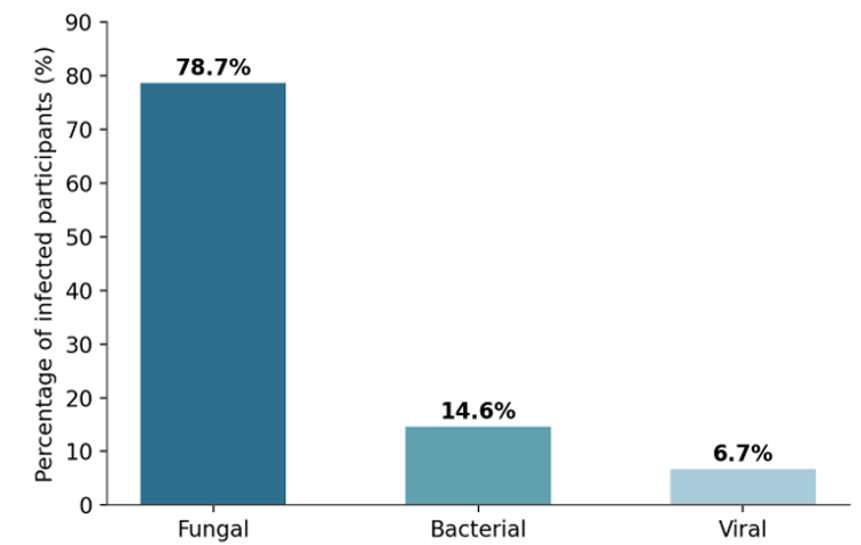
Fig. 1: Pattern of skin infections among affected participants (n = 89). Fungal infections predominated (78.7%), followed by bacterial (14.6%) and viral (6.7%) infections
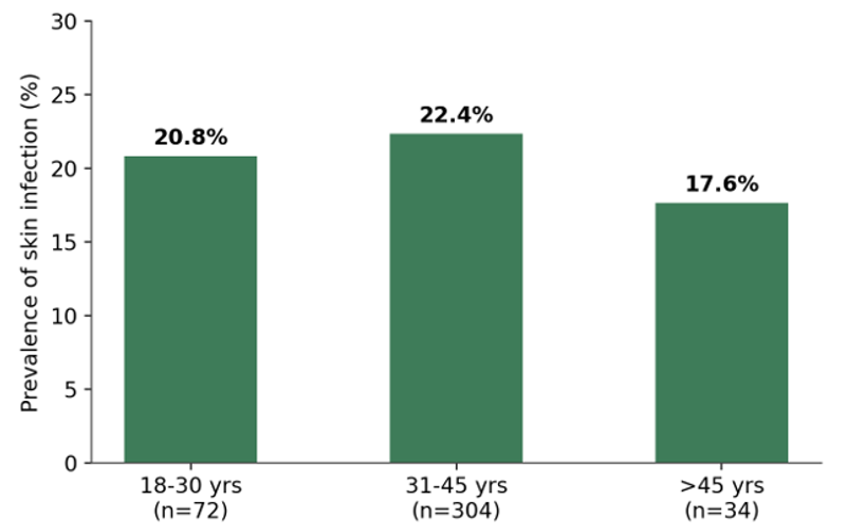
Fig. 2: Age-wise prevalence of skin infection. Prevalence was highest in the 31–45-year age group (22.4%), compared with 20.8% in the 18–30-year group and 17.6% in participants above 45 years
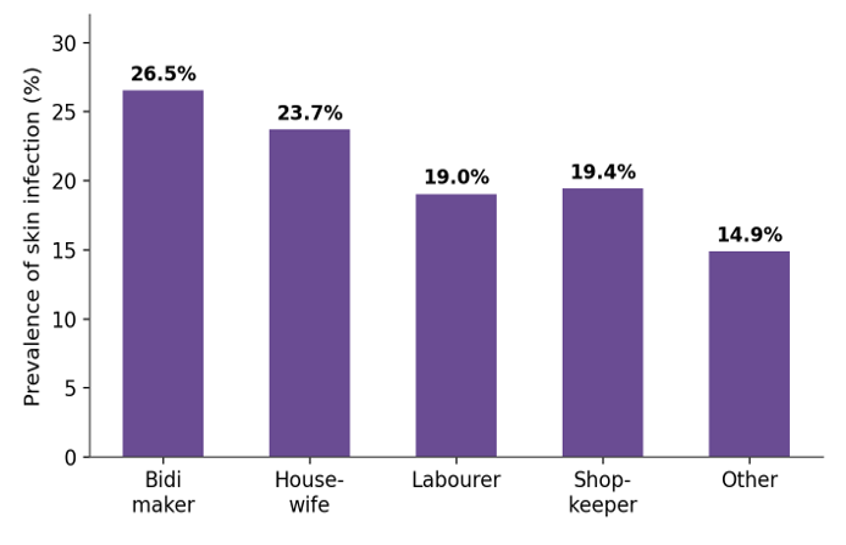
Fig. 3: Occupation-wise prevalence of skin infection. Bidi workers (26.5%) and housewives (23.7%) had the highest infection prevalence, reflecting occupational exposure to unhygienic working conditions
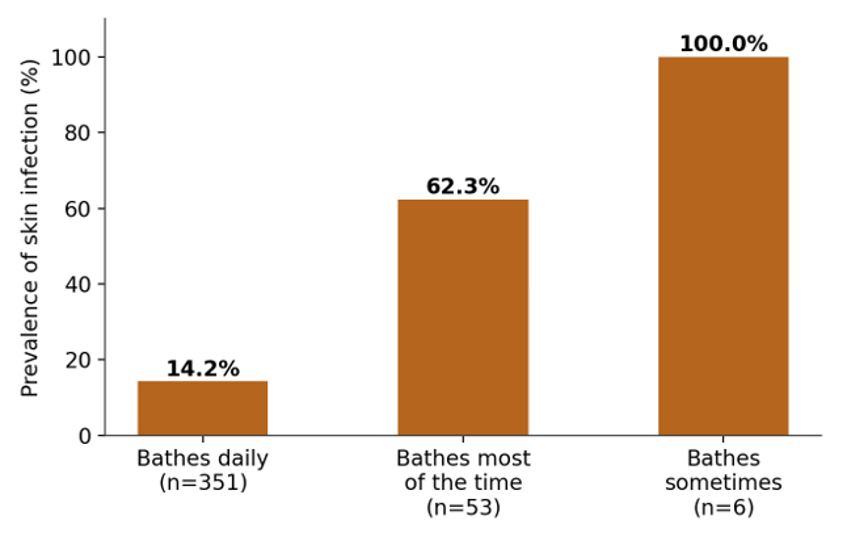
Fig. 4: Skin infection prevalence by bathing frequency. Infection prevalence rose sharply with decreasing bathing frequency, from 14.2% among daily bathers to 100% among those who bathed only occasionally (p<0.001)
| Hygiene practice |
Category | n | Skin infection n (%) |
p-value |
|---|---|---|---|---|
| Bathing frequency | Daily (always) | 351 | 50 (14.2) | |
| Most of the time | 53 | 33 (62.3) | <0.001 | |
| Occasionally | 6 | 6 (100.0) | ||
| Sharing of towels | Never | 342 | 54 (15.8) | |
| Sometimes | 50 | 17 (34.0) | <0.001 | |
| Always / mostly | 18 | 18 (100.0) | ||
| Modified B.G. Prasad class | I | 161 | 0 (0.0) | |
| II | 156 | 34 (21.8) | ||
| III | 80 | 48 (60.0) | <0.001 | |
| IV | 9 | 3 (33.3) | ||
| V | 4 | 4 (100.0) | ||
| Diabetes mellitus | Present | 89 | 89 (100.0)* | <0.001 |
| Absent | 321 | 0 (0.0)* | ||
| Atopy | Present | 14 | — | 0.472 |
| Absent | 396 | — |
Table 2: Association of personal hygiene practices, socio-economic status, and diabetes with skin infection (n = 410)
Association with socio-economic status and comorbidities
A significant inverse gradient was observed between Modified B.G. Prasad socio-economic class and infection status (p<0001): no infections occurred among participants of class I, whereas infection prevalence rose to 21.8% in class II, 60% in class III, 33.3% in class IV, and 100% in class V. All diabetic participants in the study were having skin infections, giving a highly significant association between diabetes and infection status (p<0.001). By contrast, atopy showed no significant association with either the presence (p=0.472) or type of skin infection (p ranging 0.13–0.70).
DISCUSSION
This community-based, cross-sectional study of 410 rural adults found an overall skin-infection prevalence of 21.7%, with fungal infections predominating (78.7%), consistent with earlier community surveys from rural and semi-urban India that similarly report fungal dermatoses, particularly dermatophytosis, as the leading cause of infectious skin disease in warm, humid environments[1, 4].
A key finding of this study was the strong, dose-dependent relationship between bathing frequency and skin infection: infection prevalence rose from 14.2% among daily bathers to 100% among those who bathed only occasionally (p<0.001). This mirrors the findings of Mahmud et al., who reported that poor personal hygiene, particularly in overcrowded settings, was strongly linked to a higher prevalence of skin and scalp infestations[10], and is consistent with Gorwitz et al., who emphasised regular washing as central to interrupting cutaneous bacterial transmission[11]. Similarly, the sharing of towels emerged as a powerful risk factor, with all participants who regularly shared towels being infected — a pattern in keeping with Mary's observations in the slums of Chennai, where the sharing of personal items was identified as a major determinant of preventable skin disease[12].
Diabetes showed the strongest association of any variable examined, with all diabetic participants in the affected group having a skin infection (p<0.001). This is biologically plausible, as impaired peripheral circulation, neuropathy, and relative immune dysfunction in diabetes are well documented to increase susceptibility to cutaneous bacterial and fungal infection[11], underscoring the need for dedicated skin-care counselling as part of routine diabetes management in rural primary care[13]. In contrast, atopy showed no significant association with infection in this cohort (p=0.472), differing from the findings of Jain et al. in rural central India, who reported a link between atopic predisposition and skin disease prevalence[14]; this discrepancy may reflect the relatively low prevalence of atopy (4%) in the present sample, limiting statistical power to detect a true association.
Occupation-related exposure was also relevant: housewives and bidi workers, who are frequently exposed to water, detergents, and communal work settings, had disproportionately higher rates of fungal infection, in agreement with earlier observations linking domestic and informal-sector occupations to a higher burden of preventable dermatoses[12]. The strong inverse gradient between Modified B.G. Prasad socio-economic class and infection prevalence further reinforces that infection risk in this setting is closely tied to the broader socio-environmental determinants of hygiene and sanitation access, rather than to any single behaviour in isolation.
Strengths and limitations
The principal strengths of this study are community-representative sample, house-to-house data collection with direct clinical skin examination (rather than reliance on self-report alone), and the systematic evaluation of multiple hygiene domains against a validated socio-economic classification. However, the cross-sectional design precludes causal inference, self-reported hygiene data may be subject to recall or social-desirability bias, purposive sampling limits generalisability beyond similar rural settings, and healthcare-seeking behaviour and access were not directly assessed.
CONCLUSION
This study demonstrates that skin infections remain a substantial and largely preventable health problem among rural adults, closely linked to modifiable hygiene behaviours — particularly bathing frequency and the sharing of personal items such as towels — as well as to lower socio-economic status and diabetes. These findings support the integration of targeted hygiene-education campaigns, improved access to water and sanitation, and dermatological screening within diabetes-care programmes as practical, evidence-based strategies to reduce the burden of skin infection in similar rural communities. Longitudinal studies are warranted to establish causality and to evaluate the impact of such interventions.
DISCLOSURE
Acknowledgement: I would like to acknowledge late Dr Lakshminaryan Bhat B, former associate professor, Dept. of Dermatology, Kanachur Institute of Medical Sciences who has guided this article.
Conflict of interest: None.
Funding: Nil.
References
1. Hay R, Bendeck SE, Chen S, Estrada R, Haddix A, McLeod T, et al. Skin diseases. In: Jamison DT, Breman JG, Measham AR, Alleyne G, Claeson M, Evans DB, et al., editors. Disease Control Priorities in Developing Countries. 2nd ed. 2006; Available from: https://doi.org/10.1596/978-0-8213-6179-5/chpt-37
2. Roderick JH. Skin disease in the tropics and the lessons that can be learned from leprosy and other neglected diseases. Acta Dermato Venereologica. 2020; 100 (9). Available from: https://doi.org/10.2340/00015555-3469
3. Seth D, Cheldize K, Brown D, Freeman EE. Global Burden of Skin Disease: Inequities and Innovations. Current Dermatology Reports. 2017; 6 (3). Available from: https://doi.org/10.1007/s13671-017-0192-7
4. Grover S, Ranyal RK, Bedi MK. A cross section of skin diseases in rural Allahabad. Indian Journal of Dermatology. 2008; 53 (4). Available from: https://doi.org/10.4103/0019-5154.44789
5. Sarkar M. Personal hygiene among primary school children living in a slum of Kolkata, India. Journal of Preventive Medicine and Hygiene. 2013;54(3):153-8.
6. Suroshe P, Rathod V. Incidence and sociodemographic profile of scabies in paediatric patients attending secondary health care hospital. MedPulse International Journal of Pediatrics. 2019; 10 (1). Available from: https://doi.org/10.26611/10141012
7. Dehkharghani S, Bible J, Chen JG, Feldman SR, Fleischer AB Jr. The economic burden of skin disease in the United States. Journal of the American Academy of Dermatology. 2003; 48 (4). Available from: https://doi.org/10.1067/mjd.2003.178
8. Kuruvilla M, Sridhar KS, Kumar P, Rao GS. Pattern of skin diseases in Bantwal Taluq, Dakshina Kannada. Indian Journal of Dermatology, Venereology, and Leprology. 2000; 66 (5). Available from: https://pubmed.ncbi.nlm.nih.gov/20877090/
9. Singh A, Barnard TG. Health Science Students’ Perceptions of Hand Hygiene Education and Practice in a South African University: Introducing the University Hand Hygiene Improvement Model. Healthcare. 2023; 11 (18). Available from: https://doi.org/10.3390/healthcare11182553
10. Mahmud M, Pappas G, Hadden W. Prevalence of head lice and hygiene practices among adult women in rural Pakistan. ournal of Health, Population and Nutrition. 2011;29(2):131-8.
11. Gorwitz RJ, Fridkin SK, Workowski KA. Challenges in preventing and managing community-associated methicillin-resistant Staphylococcus aureus (CA-MRSA) skin infections. JAMA. 2008;299(9):1064-70.
12. Mary L. Prevalence of preventable skin diseases and their risk factors in the slums of Chennai. Indian Journal of Dermatology. 2015;60(3):296-9.
13. Kurtalić N, Kurtalić S, Salihbegovic E. Skin changes in patients with diabetes mellitus. Medical Archives. 2018;72(5):356-9.
14. Jain S, Barambhe MS, Jain J, Jajoo UN, Pandey N. Prevalence of skin diseases in rural Central India: A community-based, cross-sectional, observational study. Journal of Mahatma Gandhi Institute of Medical Sciences. 2016; 21 (2). Available from: https://doi.org/10.4103/0971-9903.189537
Copyright
© 2026 Published by Laxmi Memorial Education Trust. This is an open-access article under CC BY 4.0 license. (https://creativecommons.org/licenses/by/4.0/)
Cite this article
Yashoda Khandre, P Akshatha Sharma, Myfanwy Joanne Dsouza, Shrutakirthi Shenoi, Shahul Hameed, A S Inchara, K Chethana, Madadi Pragnya. Prevalence of Skin Infections and their Association with Personal Hygiene Among Adults in a Rural Community: A Cross-Sectional Study in Dakshina Kannada. AJ J Med Sci 2026;3(2):62-67